Konstantin Semenenko
June 25, 2026
4
minutes read
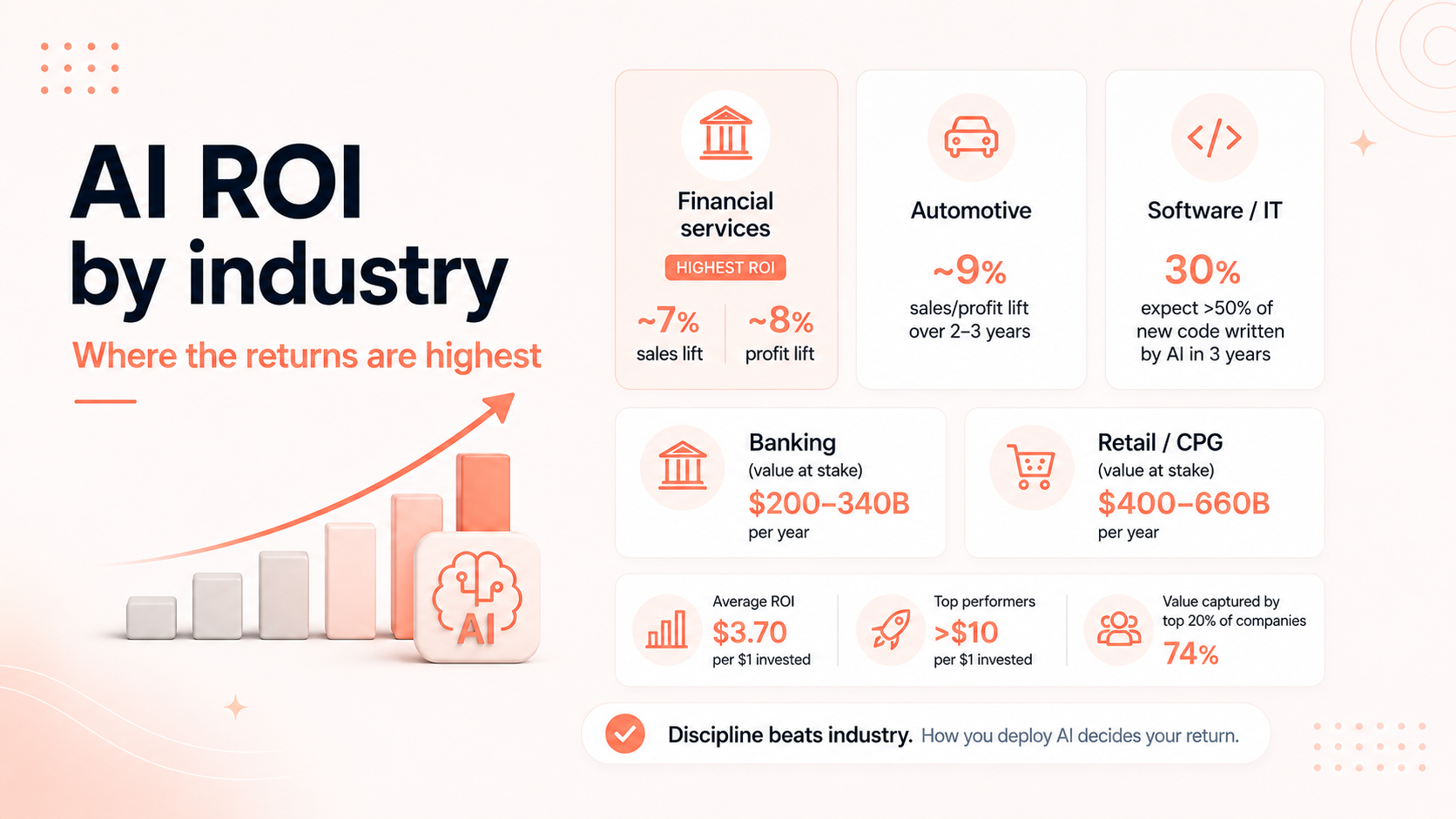
No. The better move is to run AI on top of the tools you already have, not replace them. IDC found companies see about $3.70 back per dollar on AI, and the top tier over $10. The spread comes from aiming AI at the real between-systems work, not from buying new software.




No. Using AI doesn't mean replacing your tools. For most businesses the better move is to run AI on top of the systems they already have, where it does the moving and deciding a person was doing between them. The stack stays. The manual work around it goes.
Replacement feels like progress and usually isn't. Here's why the on-top approach wins, and what it looks like in practice.
Tearing out a working system to install one with AI features buys you migration, retraining, downtime, and risk, in return for the same records you already had. The records were rarely the problem. The manual work around them was, and a new tool just relocates that work without removing it.
A fresh platform also carries its own assumed process and its own gaps. You'd swap a familiar workaround for an unfamiliar one. That's movement, not progress.
The AI layer connects to your tools through their APIs and does the work a person did between them. A web form comes in and the right records update on their own. An email arrives and the layer decides what it is and where it belongs. A report assembles itself from four systems. A routine document gets drafted and waits for a human to approve it.
The CRM stays the CRM. The accounting tool stays the accounting tool. The new part is the layer on top, and it's the part carrying the busywork. On our own builds we default to this: sit the automation on top of what the client already runs, rather than asking them to move.
Most stacks include systems that were never meant to share data, so a person became the bridge. An AI layer can take that role instead, reading from one, judging what matters, and writing to the other. The difference from a rigid integration is the messy case. A hard-wired connection breaks on the first thing it didn't expect, and the messy exception is exactly the work you wanted gone. The layer can interpret it and route it to a person instead of failing in silence.
IDC's research, commissioned by Microsoft, found companies see about $3.70 back for every dollar put into AI, while the top tier reaches $10. The spread isn't the tools. It's whether AI was aimed at the real work, which is usually the awkward, between-systems work nobody enjoys.
On top doesn't mean unattended. A refund call, an unusual exception, a sensitive reply, all go to a person. The automation carries volume and routine, flags what it's unsure about, and leaves a trail you can audit. Customers still reach people. AI handles the repetitive back-office work, which is where it belongs and where it pays.
We start with AI Discovery, a week or two spent looking at the tools you run, finding where a person is acting as the bridge, and putting a number on what automating it is worth. If you move ahead, the cost folds into the build. If your team is the integration between two systems that don't talk, that's the first thing we'd move. Book a call and we'll show you what it looks like on your stack.
Tell us which workflow eats time, creates errors, or keeps landing back in a human review queue. We map the data, tools, risks, and escalation path before recommending anything.