Konstantin Semenenko
June 25, 2026
3
minutes read
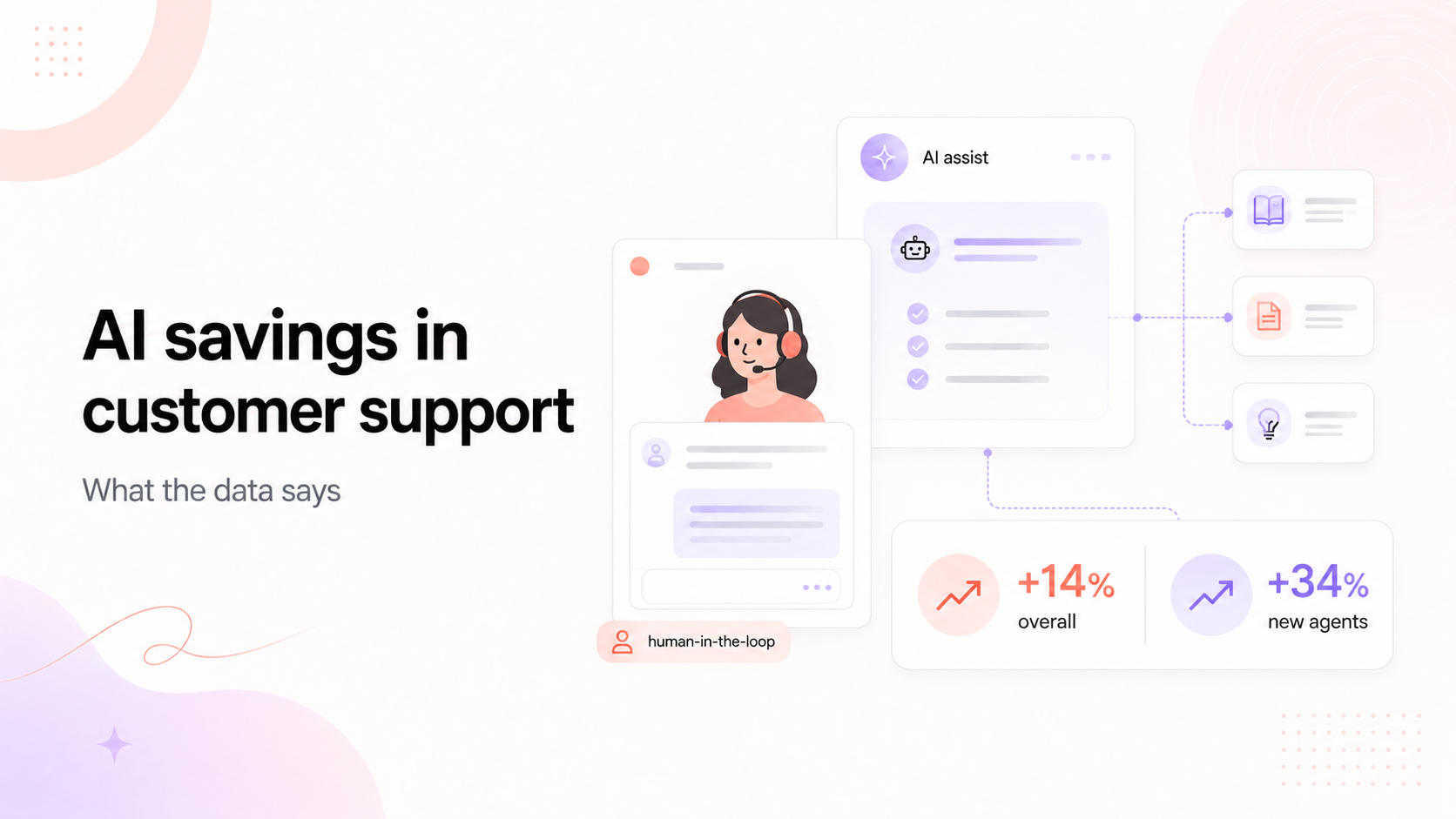
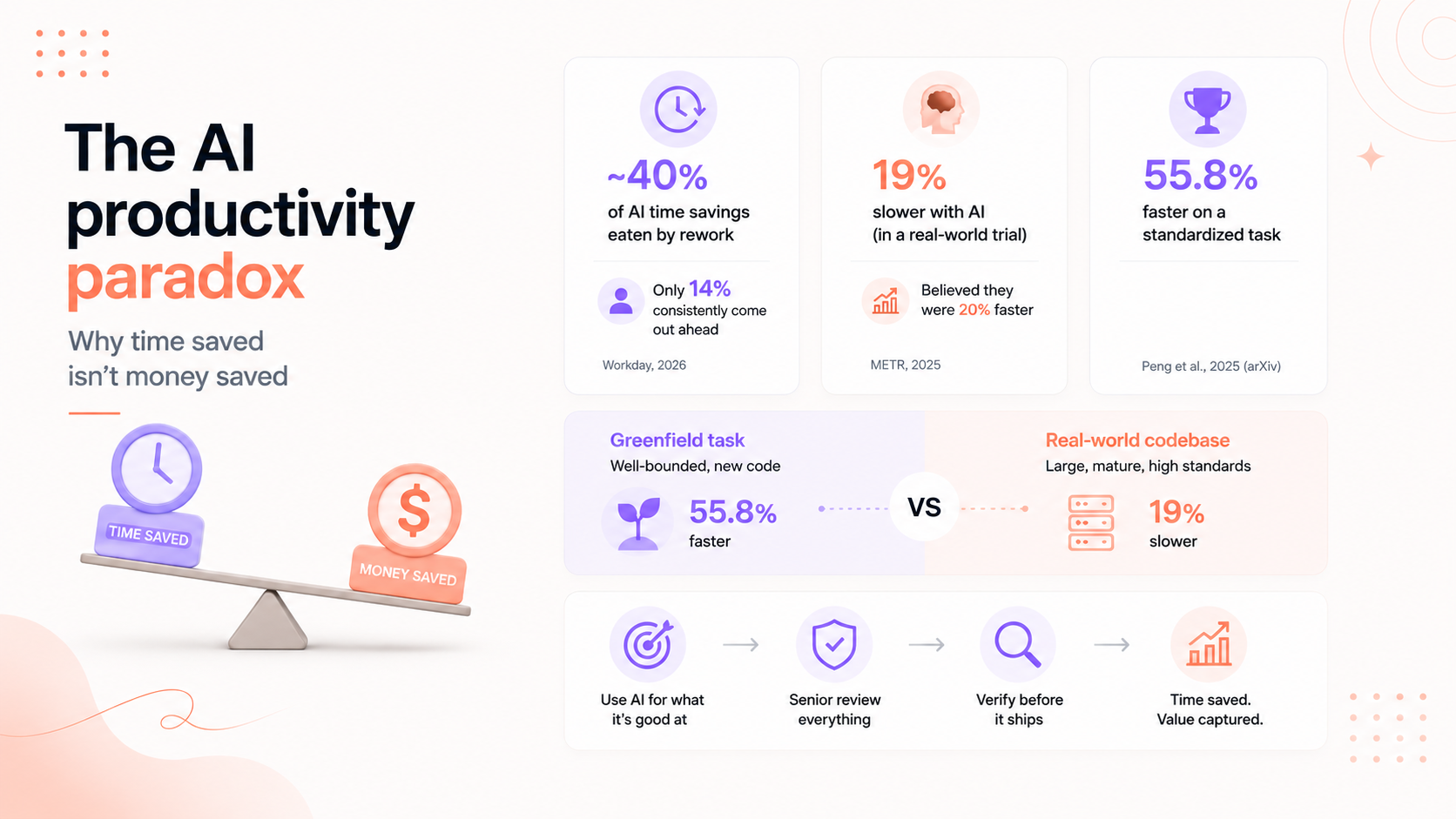
Workday found nearly 40% of AI time savings are eaten by rework, with only 14% of employees consistently coming out ahead, and a controlled trial found experienced developers were 19% slower with AI while believing they were faster. Speed and value are not the same thing.




AI clearly saves time. Yet a lot of that time never reaches the bottom line. This gap, between time saved and value captured, is the AI productivity paradox, and the 2026 data finally puts numbers on it.
The short version: Workday found nearly 40% of AI time savings are eaten by rework, with only 14% of employees consistently coming out ahead, and a controlled trial found experienced developers were actually 19% slower with AI while believing they were faster. Speed and value are not the same thing, and the gap is where ROI quietly disappears.
We build and rescue production software with AI every day, so this paradox is one we work inside constantly.
It's the gap between feeling faster and being better off. Workday's 2026 study of 3,200 people found that while 85% save one to seven hours a week with AI, nearly 40% of that saving is spent correcting, verifying, and rewriting its output, costing roughly two weeks per employee per year. Only 14% consistently end up net-positive. The time is real; the value leaks back out.
Yes, and there's a controlled trial proving it. METR ran a randomized trial with experienced open-source developers on their own mature codebases and found that allowing AI made them 19% slower. The unsettling part: the same developers forecast AI would make them 24% faster, and even after finishing still believed it had sped them up by 20%. The perception gap is the real danger, because you can't manage a slowdown you can't feel.
It did, and reconciling the two is the whole point. Context decides the outcome.
AI wins big on fresh, well-bounded, boilerplate-heavy work, and struggles on large existing systems with high quality bars. Which describes most production software.
Review and rework. AI output has to be checked, and on serious systems that check is not cheap: Workday found 77% of employees review AI-generated work as carefully as human work, if not more. When nobody senior does that review, bad output ships and the cost reappears downstream as bugs and rework. Speed without review just relocates the work.
You close the gap with judgment, not more speed. Point AI at the work it's actually good at, keep experienced engineers reviewing what it produces, and put a verification step before anything ships. That's how the 14% who come out ahead actually do it, and it's how we work: AI for the first draft, senior review for everything that reaches production. We wrote about that discipline in making AI coding agents ship production-ready code. If you want a team that captures the saving instead of leaking it, that's AI Dev Team.
Tell us which workflow eats time, creates errors, or keeps landing back in a human review queue. We map the data, tools, risks, and escalation path before recommending anything.