MVP Development
How to turn a no-code MVP into production software
 4minutes read
You turn a no-code MVP into production software by keeping the validated product and rebuilding the engineering underneath it: a real data model, real security, real tests, and an architecture you can extend. The path that works is incremental, starting from discovery, with the product staying live.




A no-code MVP is the right way to start and the wrong way to scale. It proves the idea fast, then hits a wall the moment you have real users, real data, and real money on the line. Here is how to move from a no-code MVP to production software without losing what already works.
You turn a no-code MVP into production software by keeping the validated product and rebuilding the engineering underneath it: a real data model, real security, real tests, and an architecture you can extend. The mistake is treating it as a single rewrite. The path that works is incremental, starting from discovery, with the product staying live the whole time.
When does a no-code MVP hit a wall?
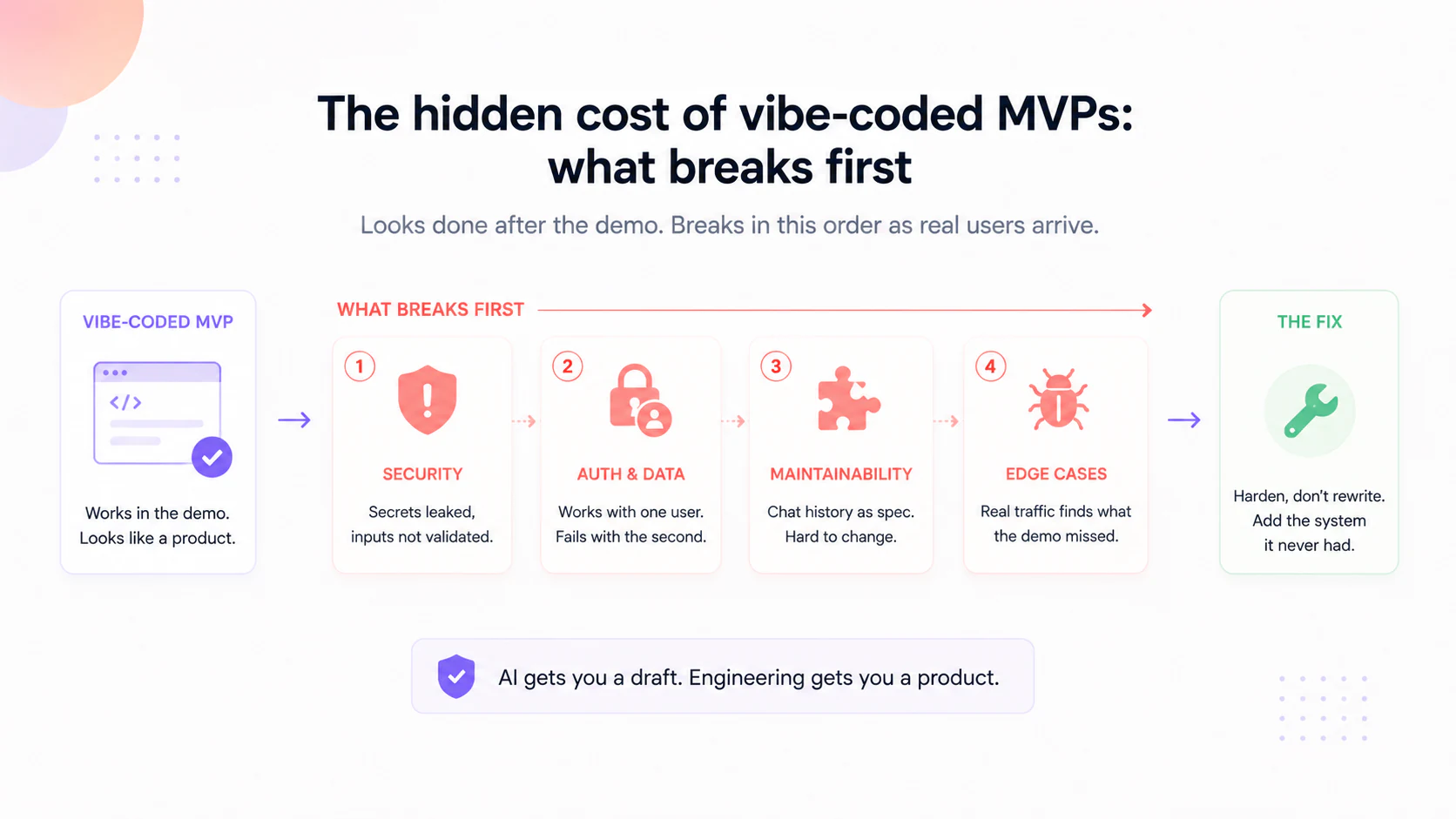
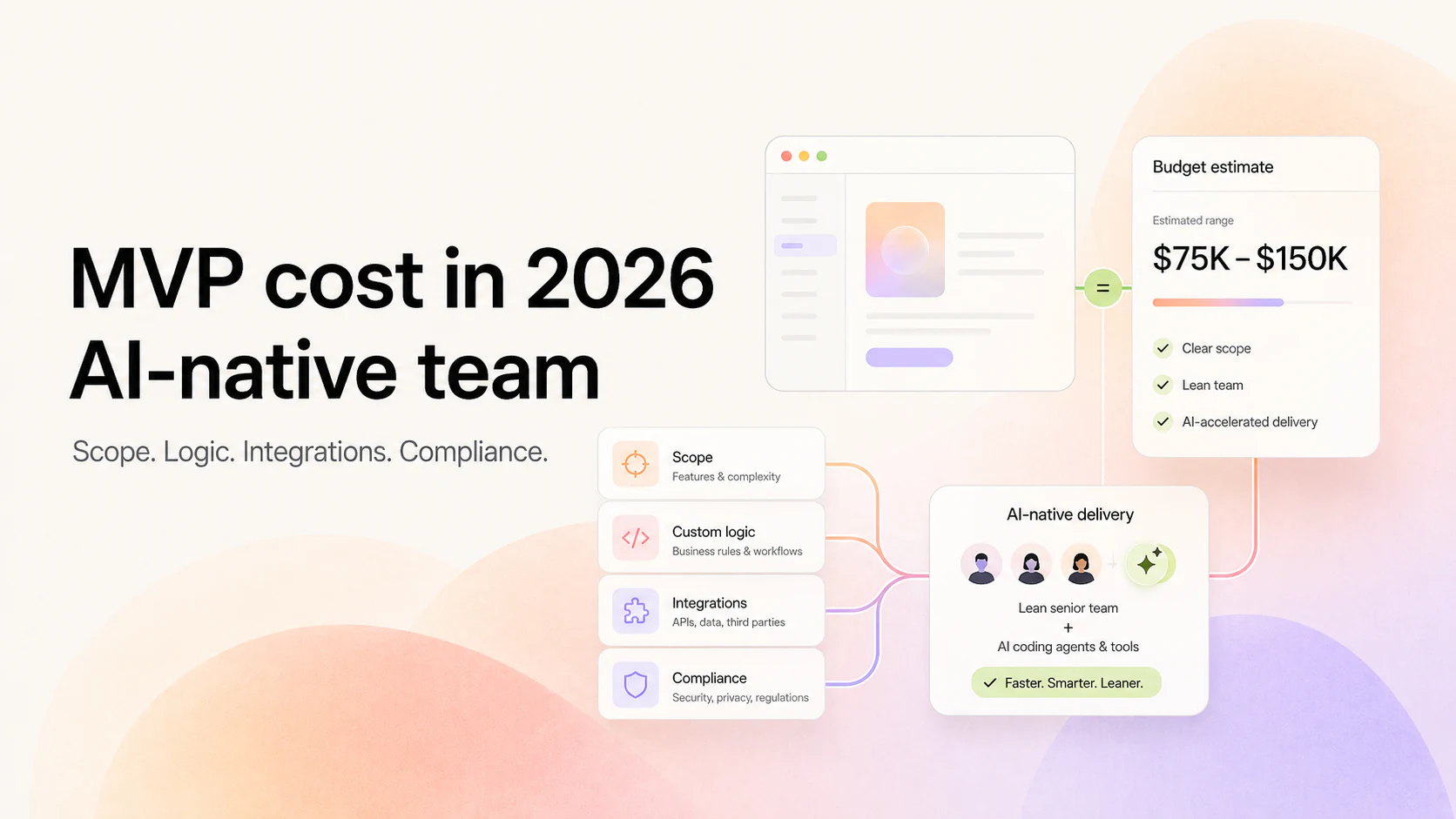
The wall is predictable. It shows up when you need something the platform was never built to give you: custom logic it cannot express, performance it cannot reach, data ownership it does not allow, integrations it does not support, or compliance it cannot satisfy.
The signs are consistent. Pages get slow as data grows. You start paying per-record fees that scale the wrong way. A feature your customers need is "impossible on this platform." You cannot pass a security review. You do not fully control your own data. Any one of these means the MVP did its job and the product has outgrown it.
What does "production-ready" actually mean?
Production-ready is not a polish pass. It means the software holds up when reality stops being friendly.
In concrete terms that is: a data model that stays consistent under load, authentication and authorization you can defend, validation on every input, error and edge-case handling, automated tests on the paths that matter, and an architecture where the next feature does not break the last one. For regulated work it also means meeting HIPAA, GDPR, or financial-compliance requirements, which no-code platforms generally cannot satisfy on your behalf.
The no-code MVP proved people want the product. Production is what lets you actually run it.
Should you rebuild or migrate?
Mostly rebuild the engine, keep the product. The validated thing is the product: the flows, the screens, the decisions about what users need. That knowledge is expensive and you keep all of it. What gets replaced is the foundation the no-code tool was standing in for.
A full big-bang rewrite is the tempting and usually wrong option, because it takes the product offline for months and bets everything on one launch. The safer path rebuilds incrementally behind a stable surface, so users keep using the product while the engine gets swapped out underneath them.
What is the path from MVP to production?
This is the route we use:
- Discovery: map the product, the user journeys, and the technical risks, and decide what to keep, replace, and add. This turns assumptions into decisions before anyone writes code.
- Architecture: design the data model, the security boundary, and the system the product will actually run on.
- Incremental rebuild: replace the fragile pieces one at a time, each covered by tests, with a working demo every Friday so progress is visible.
- Hardening: load, security, edge cases, and compliance, so the product survives its own success.
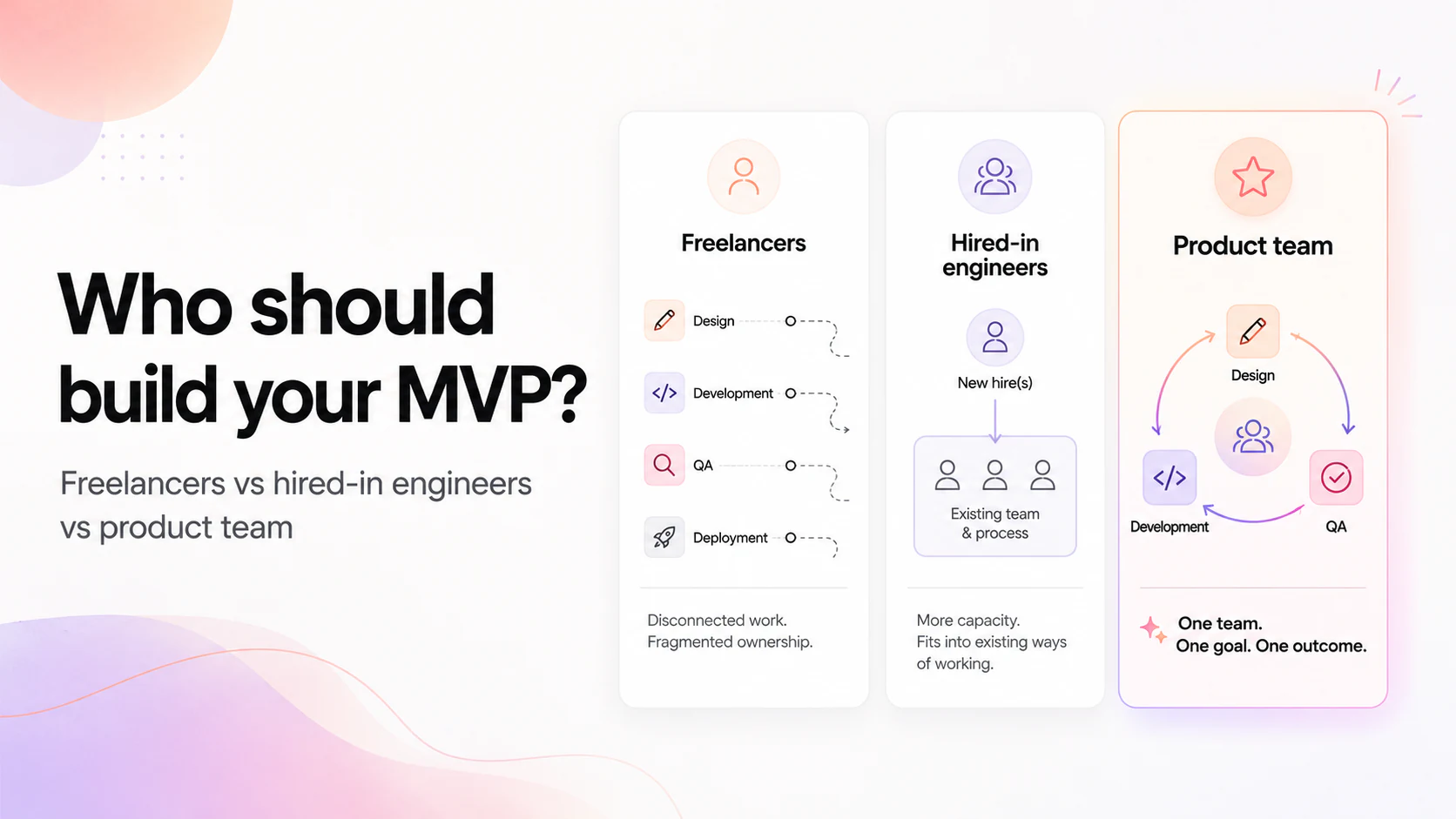
One team carries this end to end: design, engineering, and QA in one repo, with AI tooling on every workstation. The result of a much larger traditional crew, without the handoffs.
How do you keep the product live while you rebuild?
You rebuild behind the product, not in front of it. New production-grade services go in piece by piece while the existing app keeps serving users, and you cut over each part only when it is proven. There is no dark month where the product disappears and everyone hopes the relaunch works.
What does it cost you to wait?
Every month on an outgrown MVP charges interest. Performance complaints turn into churn, the security gap becomes a real risk, the missing feature becomes a lost deal, and the eventual rebuild only gets bigger. The cheapest version of this project is the one you start before the wall does real damage.
If your no-code MVP is hitting that wall, AI Discovery is the first step, and AI Product Team is the team that takes it to production.
News & Insights
Start here
Bring us the agent that keeps braking
Tell us which workflow eats time, creates errors, or keeps landing back in a human review queue. We map the data, tools, risks, and escalation path before recommending anything.
Tell us the workflow that eats your time. We'll map it, show you a range, and say if automation is even worth it.