Konstantin Semenenko
June 24, 2026
5
minutes read
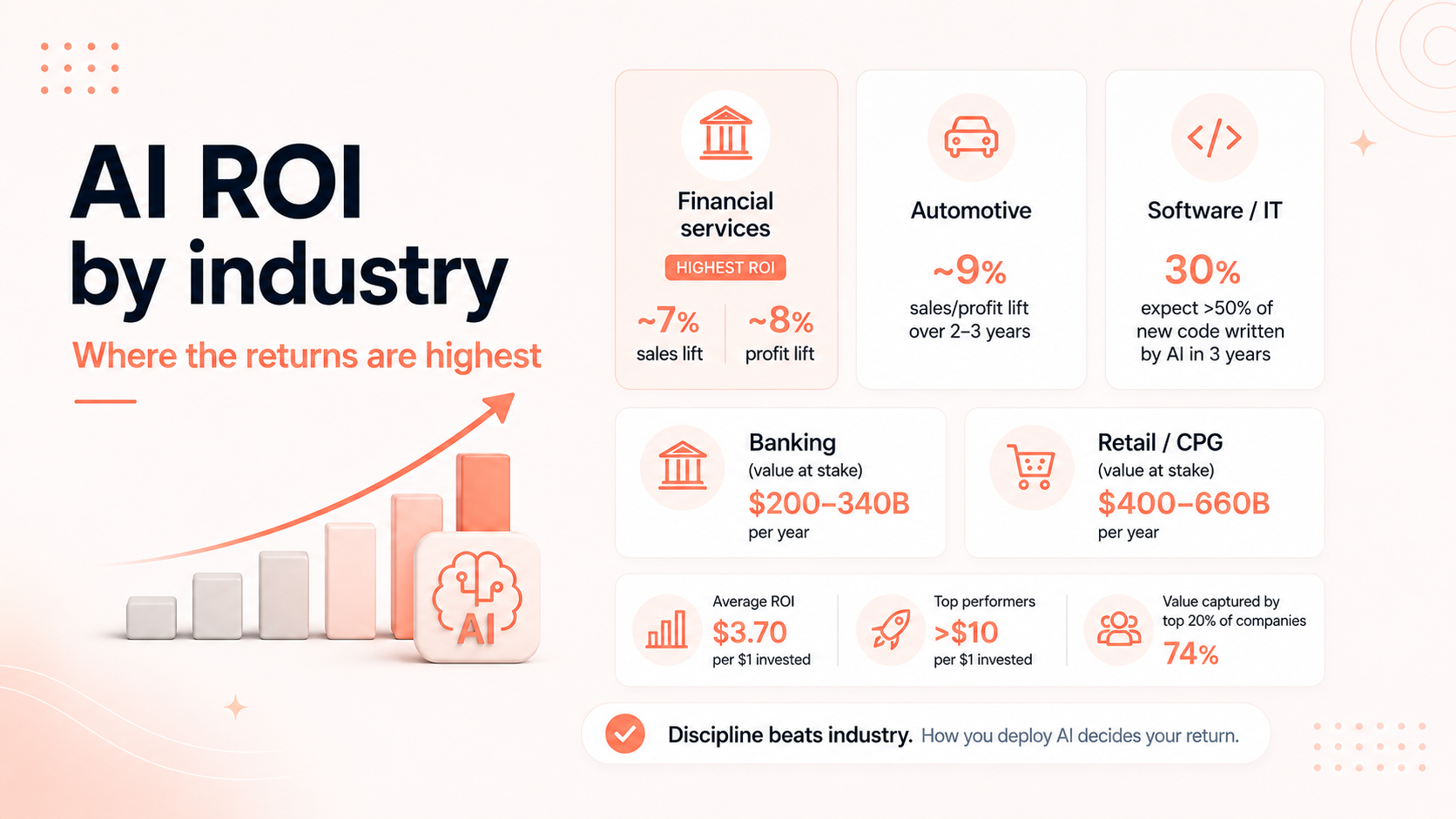
The average company sees a real return on AI, but the range is enormous, and most of the value goes to a small minority. IDC puts the average at around $3.70 back per dollar invested, while top performers see over $10, and an independent IBM survey found an average return as low as 5.9%.




"Is AI worth it?" is the question every operations leader is being asked right now, usually by someone holding a budget. The honest answer isn't a yes or a no, it's a number with a condition attached. Here's what the 2026 ROI data actually says, and what separates the companies that profit from AI from the ones that don't.
The short answer: the average company sees a real return on AI, but the range is enormous, and most of the value goes to a small minority. IDC puts the average at around $3.70 back per dollar invested, while an independent IBM survey found an average return as low as 5.9%. The difference isn't the tools. It's whether the work around them is done with discipline.
We calculate this per client in a Discovery before any build, so this is the math we actually stand behind.
Positive on average, but wildly uneven, and the source matters. Vendor-sponsored numbers run high; independent ones run lower. Both are worth seeing side by side.
Both can be true at once. AI pays off well for some and barely at all for others, and the average hides the thing that matters, which is which group you land in.
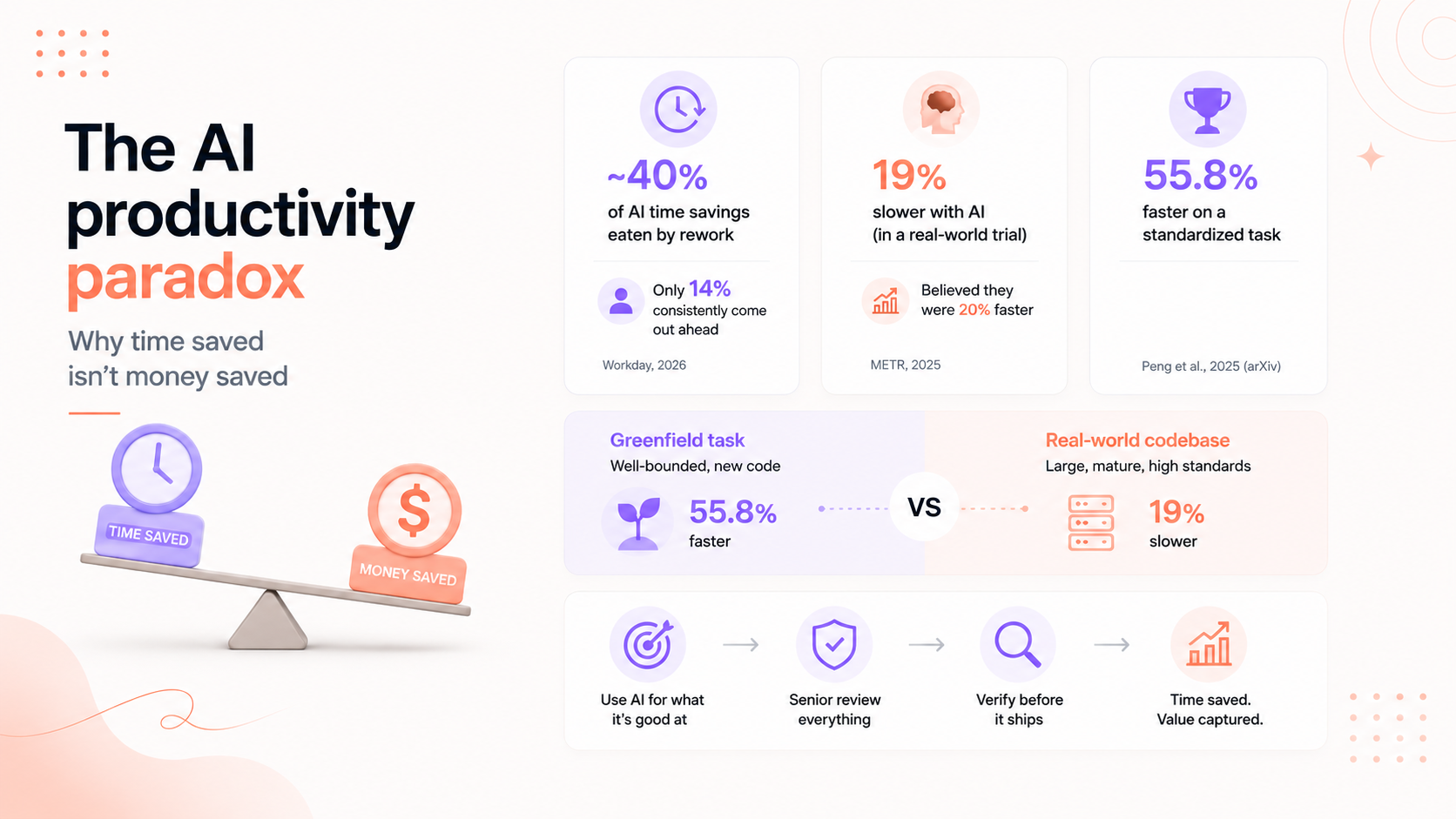
This is where the return comes from: the same work, measured by hand and with AI, in controlled studies and named research.
The savings are real because the waste being removed is real: automating the manual step takes out the labor and the error cost at once.
Because most of the value is captured by a few disciplined players. Two independent 2026 studies say the same thing from different angles.
Buying AI gets you into the game. It doesn't put you in the winning fifth.
They change the process, not just the tool. The winners aim automation at the genuinely expensive manual work and keep a senior human reviewing the output. Menlo Ventures' 2025 research makes the same point with money: durable returns come from AI embedded into how work gets done, while standalone tools struggle to deliver sustained value. ROI follows integration and discipline, not license count.
Often within a year, when it's aimed correctly. IDC found organizations realize a return within about 14 months of deployment on average. But "aimed correctly" is doing the work in that sentence: payback is fast when you automate a process that was genuinely costing you, and slow or negative when you automate something that wasn't. This is why the number has to come before the build, not after.
Start by measuring, not buying. Before committing to a build, run a Discovery that calculates your specific ROI, picks the highest-value process to automate first, and puts senior review around the output so the savings don't leak back out. If you want to know what AI automation would actually return in your business, not in a case study, that is a short conversation worth having. Book a 15-minute call and we will walk through where the return is for your specific workflows.
Tell us which workflow eats time, creates errors, or keeps landing back in a human review queue. We map the data, tools, risks, and escalation path before recommending anything.